Saturday, May 10, 2014

SMART Amp and Collaboration?

This week I had the chance to attend "Exploring Education, Collaboration and Technology: Thought-Leader Panel and Live Remote Classroom Collaboration."  This was really a press release from SMART Technologies to introduce, to the educational press, new software, SMART Amp software, that allows collaboration within SMART Notebook. I was offered this opportunity by Tall Grass Public Relations, who was hired by SMART to get the word out.  I commend Tall Grass for asking a teacher to attend.  Just about everyone else there was in the media.

Now, having said that, I do want you all to know I had a wonderful time, learned a great deal about what's coming, and made some fabulous connections. Here are my take-aways.


  • The Panel
    • SMART coordinated a panel discussion with Angela Maiers, Education Writer/Speaker/Teacher, Clay Shirky, Social Media Theorist, and Cristin Frodella, Google Global Education.  This group of education heavy hitters was the best part of the presentation.  They had an honest conversation about collaboration.  
    • Key Points:
      • Collaboration and technology enables introverted children to have a voice in the classroom, without being interrupted by the extroverts.
      • Collaboration must be taught.
      • There is a difference between collaboration and cooperation.  Cooperation requires only one leader and everyone else follows.  Collaboration requires all members of a group to work together toward a common goal.  
      • Collaboration teaches empathy and assertion.
      • In collaboration, children challenge each other to be better.  They learn about the ethics of contribution (who does what and how much).  They find out they are smarter together.
  • SMART Amp
    • SMART Amp is a cloud-based software.  So children can work on projects anywhere, anytime. 
    • It was built on Google's design.
    • All devices can be used to access Amp.  So a BYOD classroom would have no issues with compatibility of different operating systems.
    • The cost is $9 per student per year.  There was indication, though, that discounts would apply to districts and schools to bring the cost down.
    • Anything pulled into the Amp project shows up visually.  A video pulled in will be a small window ready to watch.  A website pulled in is a small, clickable box ready to use.  
  • SMART Amp Presentation
    • The presentation of SMART Amp encompassed two classes, one right in the next room and one in San Diego, working on a biomes activity together within the SMART Amp software.
    • Key Points about the Presentation:
      • The project that was set up for the children was not a collaborative project, but, rather, a cooperative project.  The children worked together to complete a teacher made assignment projected on the SMARTBoard within the Amp Software.
      • The children worked on the same project but on two different graphic organizers.  Their work did not come together until the end, when they had to complete one graphic organizer together.
      • The software is very visual and easy to use.  One student even said, "I call this magic."
      • The teachers from both class said they were surprised and delighted by the active engagement and the sharing of ideas.  They liked that the room was not static.  Instead, the children talked to each other, moved around, and worked together.  They also both said it was easy to move from whole group instruction to small group instruction within the software.
      • There is a button that allows the teacher to lock the program for the students, so if they are working and you need their attention, you can just shut them down.  Not sure I like this idea at all.  It means, for me, that you are, ultimately taking control of the project, which lowers the excitement and enthusiasm for the students.
  • My Bottom Line
    • There is no communication tool built into the Amp.  So no chat room and no video conferencing.  All collaboration is done with the person in the same room with you.  SMART set up video conferencing separate from the Amp software, for the children to use. I did speak with Giancarlo Brotto, the SMART Technologies Education Solutions Consultant, who hinted that a chatroom was on list of things to add. It is a plus that, as they add new features to the Amp, teachers won't have to pay for updates.
    • I did not see any way to share the final project with anyone who doesn't have Amp software.  I know it is difficult to share SMART Notebook presentations.  You can turn them into PDFs but all the bells and whistles don't go into a PDF.  I believe Amp is the same.
    • When I told my class what I was seeing, they were excited.  "That sounds perfect for us!  It is what we do."  
    • I am going to be trying it out in my classroom for free.  I will have my kids work on and will try to get another class to join in. Stay tuned!


Monday, December 23, 2013

Merry Ch....Happy Ho...Have a Nice Day!


When I went to school, way back when, my music classes regularly sang Christmas carols, my art classes colored Santas and Christmas trees, my writing classes had us writing about our favorite Christmas present, my homeroom classes had us making Christmas presents for our parents. 

When I went to school, in a sort of diverse neighborhood on Long Island, in New York, I went to school as a Jewish child painfully aware of how different I was.  A kind teacher might say to me, "Lisa, you can make Hanukkah presents." But mostly, I was just ignored and told to do what everyone else was doing.  The whole school, the whole town, seemingly the whole world was celebrating a holiday I had nothing to do with.

Today, I work in a wildly diverse school district on Long Island, in New York.  My students celebrate Christmas, Hanukkah, Divali, Kwanzaa, sometimes nothing at all.  I spend most of my time in the classroom helping my children understand diversity and celebrating it, not fearing it.  I work to help children relate to others who are different, not copy them.  I encourage the children to share their cultures and feel proud of who they are.

In our country, we struggle with this amazing diversity.  Many places in the United States are not diverse.  In many places, everyone celebrates one holiday.  In most places, there are no issues with decorating the stores, the towns, the streets with Christmas decorations.  There is no question about playing Christmas music over loudspeakers in the local mall.  And teachers are free to color Santa and write about favorite Christmas presents.

But we need to begin to understand more of the big picture.  We are a diverse country and we have many, too many, instances of people not accepting of this diversity.  We have many people in our country who would be quite happy to "keep America white and Christian."  Thankfully, that view is not held by most but what do we teach our students when we focus on a religious holiday in a public school?  Are we letting our children know that even those with different beliefs are to be respected when we only see Christmas decorations at the public library or on the lawn of Town Hall?  How ridiculous do we make others seem when we "honor" them by sticking a menorah next to the nativity scene on the lawn?  "There," we can say to our young,"we care about everyone.  Look, we have covered all the holidays with the Christmas tree and the menorah."

My job, as an educator and as a parent, is to prepare my children for the future.  And I have the great opportunity to help mold that future.  I want a future that is better than today.  I want diversity to be recognized, revered, and accepted.  I want peace.  Peace will only come with understanding.  Understanding will only come with honest recognition.

So I don't say Merry Christmas, or even Happy Holidays, unless I know for sure what someone is celebrating.  I never assume anything.  If I want to know, I ask.  Otherwise, Happy New Year will work just fine.  Or even "Have a great vacation."  When we come back, I will ask the children about their vacations.  Many will have stories of holiday celebrations and we will share them with each other.  Many, like me, have already had their holiday and will just share our activities.  And some will not have holidays to share at all.  But we will share, learn, and enjoy.  And maybe, just maybe, my students will grow up not expecting everyone to believe what they do, practice the religion they do, and celebrate the holidays they do.  And that will be a wonderful way to live!

Peace to you all!


Monday, December 16, 2013

Parent/Teacher/Student Conferences - Why Bother?


It's that time of year again.  Time for me to meet with parents and let them know how their children are doing.  This year, just as I have done for the past ten years, I had the children in on the conferences.  The parents are always hesitant, concerned there will be something we need to discuss that they won't discuss in front of their child.  The kids are always nervous, worried that they won't know what to say or how to act.  I am always excited for the time to meet as a team. 

Each year, once it's over, teachers ask me if it was worth it.  Why would I do this anyway?  Just have the parents in and get it over with.  But I feel like it is important.  It is the child's education - not mine or mom's. The children need to know we are all there to help.  The parents need to see the children as responsible, capable learners.  This is something I would do starting in third grade, maybe even second.  Want more?  Here's what happened this year.  

Conference 1 - Parent with very little English skills
  • R.'s mom speaks English but not well.  She had many questions about the classroom, use of the internet in school, and how R was doing.  But she did not have enough English to ask me.  So she asked R., who, in turn, asked me.  My answer to R. - "Explain to your mom why we..."  Mom saw R. as a responsible mature learner for the first time.  She could have asked her all these questions at home.  But she didn't.  Maybe now she will.
Conference 2 - Parent who pushes for too much
  • E. is a struggling student who is making nice progress.  But he needs to improve his study habits and take more responsibility for his assignments.  If he did, his reading and writing skills, and all other academic areas would improve.  Mom kept telling him he needs to get all 4s next time (That is the equivalent of an A.).  I kept saying he needs to improve study habits.  She kept saying all 4s.  E. started to get upset.  I noticed, Mom did not.  I stopped Mom.  "E," I said, "what you can control is your behavior.  You cannot control whether or not your brain will learn everything quickly and easily but you can control how much effort you put into work, how much focus you have, and how responsible you are completing assignments.  Do all of that, and the academics will improve.  I don't care if you get 4s.  I want you to improve your learning strategies.  That's it."  And then I looked at Mom.  "That's what he can control right now."  He started to smile and Mom laid off.  I can't guarantee she didn't continue at home but she did hear me tell her son how well he has been doing.  And she heard her son talk about what he would change - like moving away from his friends during a lesson.
Conference 3 - Parent who believes everything the child says
  • D. is a strong student who does very little homework.  Dad wants to know why he got a low grade on homework, since he does it every night.  I ask D. to explain.  Dad says, "When I call home, you always tell me your homework is done."  D. says, "I mean my math homework."  Dad looks at me with his mouth hanging open.  D. and I begin a conversation about earning respect and being reliable.  D. explained to Dad what he would do from now on, Dad told D. he would be checking his work each night until he could count on him again to tell the truth.  I didn't have to play he said/she said without D. there.
Conference 4 - Making a Plan
  • T. is a struggling student who is overwhelmed by work.  His response to being overwhelmed is to quit.  Mom has not been helping him organize his work at home so he can complete it calmly and correctly.  She thought he was hopeless.  Together, T., Mom, and I came up with a plan to help T.  Mom is now part of the solution instead of leaving it all up to me.
Conference 5 - Getting More Attention
  • S. is a strong student, hard worker, and considerate of others.  Mom works hard and rarely has time for S.  S. wants to join my Global Awareness Club but Mom says she has no way to pick her up from the club.  I suggest a car pool.  S. looks at Mom with puppy dog eyes but says nothing.  She does not speak up for herself.  I keep pushing.  Mom finally looks at S. and says, "Do you really want to go?"  S.  nods her head furiously.  Mom says she will work from home on Wednesdays so S. can go.  I feel like S. got more from Mom with me there than she would have alone.
Conference 6 - Understanding Compliments
  • K. is a struggling student who has learned, this year, how to be an active learner.  As a result, her skills are improving and she is becoming a class leader.  Mom did not believe the progress report, thinking I was just being nice to her because the holidays were coming up.  So I had K. explain what she does when a lesson begins, how she makes sure she is in a good place to learn, and what kind of work she was doing.  It all came from K.  Mom was shocked, cried, and hugged K.  K. started to cry. I don't think she gets much praise but having Mom see how proud she was of her work changed a lot.
I have so many more examples of how having children in the conference is beneficial but I'm sure you get the idea.  I direct the conversation to the kids. I start by asking them what they are most proud of.  Then they talk about what they need to work on.  I ask how they will accomplish that task.  They talk, parents listen, I smile broadly.  I love parent/teacher/student conferences!


Tuesday, December 10, 2013

Let's Learn About Each Other - Or At Least Have Fun

Thanks to my good friend, Lee Kolbert, I now have a blog to post.  I have been feeling very guilty about not having an idea for a long time. This meme is a great way for me to get moving and for us all to learn about each other.

Be sure to read all the way to the end because YOU may have been tagged to do this on your own blog.


Here's how it works:

  1. Acknowledge the nominating blogger.
  2. Share 11 random facts about yourself.
  3. Answer the 11 questions the nominating blogger has created for you.
  4. List 11 bloggers.
  5. Post 11 questions for the bloggers you nominate to answer, and let all the bloggers know they have been nominated. Don't nominate a blogger who has nominated you.
11 Random Facts About Me
  1. I never should have gone to high school.  It was a total waste for me.  But I would love to go now and learn what I missed.
  2. I love to talk.  Okay, anyone who knows me knows that but I really do love to have conversations.
  3. I live 1 mile away from where I grew up.
  4. When I graduated college, I ran from New York and moved to Texas for a year.  I found out I really like New York.
  5. I have always wanted to dress up for an event and be the person who everyone looks at (in a positive way) when I walk into the room.
  6. I dream of writing a book about my classroom.  I am just waiting for the perfect story to happen.
  7. I was always horrible at math.  I never understood the reasons why I did anything in math so none of it made sense.  I am a really good math teacher because I learned the why.
  8. I was the kid in school most hated by teachers.  I chewed gum, read and/or talked all day, and never organized anything.
  9. I have a beautiful Bengal cat, named Sunshine, who, I believe, is autistic.
  10. I hate going anywhere alone.  I feel very insecure, as if everyone is wondering why I have no one to be with.
  11. I love trying new foods and will take any opportunity to do so.
11 Answers to Lee's Questions
  1. What did you always want to "be" when you grew up?  I really always wanted to be a teacher...or a famous singer.  But you need musical talent for that one.
  2. What kind of car do you currently drive?  I drive a Honda Civic Hybrid.
  3. What would most people be surprised to find out about you? I have been teaching since I was 21 years old and fresh out of college with my bachelor's degree.  I have worked every year and every summer since I graduated.  That was 28 years ago.
  4. How much time passes between the time when you wake up and your check your phone? I keep my phone plugged in downstairs so I get myself ready first.  It takes about an hour.  But I check my Facebook, twitter, and email responses on my IPad as soon as I wake up.
  5. When did you last write a blogpost? I'm ashamed to say my last blog was written in September.
  6. Do you suffer from Imposter Syndrome?  No.  I really am not as qualified as others believe I am.
  7. What would you do if you were not afraid? I always wanted to go hang gliding but I really want to live more than I want to hang glide.
  8. What's the most bizarre food you've ever eaten? Frog's legs?  Tongue? Snails?  Take your pick. 
  9. Do you still live in the town where you grew up? Yes, but not because I loved it growing up.
  10. If you have kids, do you let them run around in restaurants? (If you do, I hate you!) I never, ever let my daughter run around in a restaurant when she was young.  What she does now as an 18 year old is beyond my control.
  11. What's your secret indulgence? I love watching detective shows like Rizzoli and Isles and Grimm.
Your 11 Questions

1. Where have you been outside of your country?
2. What is your favorite quote?
3. Have you ever been to a live concert? If so, whose?
4. What was your favorite book when you were a child?
5. What movie do you think everyone should see and why?
6. What do you do when no one else is around?
7. What are you better at than almost everyone you know?
8. If you had one hour to live and money was no object, what would you do?
9. What is the craziest thing you've ever done?
10. What do you love about where you live? 
11. What is your secret indulgence?

Please come back here and comment if you post a blog.  I chose people I haven't connected with in a while and miss or people I just love to hear from.  And if I didn't tag you (it doesn't mean I don't love to hear from you) and you want to do this anyway, feel free and comment here so I can find out more about you.


1. Donna Roman

2. Karen McMillan
3. Stacy Kasse
4. Karen Janowski
5. Maire O'Keefe
6. Andrea Keller
7. James Cowper
8. Paul Bogush
9. Amy Mayer
10. Thomas Whitby
11. Jenny Luca

Saturday, September 21, 2013

A Look at the Start of the Year


September 2013 - The start of my 28th year of teaching.  Honestly, just putting that down in writing makes me tired.  But, so far, I am loving every minute.  We started only 11 days ago so, when I think about all we've done, I am amazed.

Cover of The One and Only Ivan1. Crying - It's true.  We all cried already.  We are reading The One and Only Ivan by Katherine Applegate and Stella...well, I won't say, in case you haven't read it, but it was heartbreaking.  I tried to hold it in but we are all so attached to the characters and, watching little faces while I read, I couldn't do it.  
While we are reading, we are discussing each night in Edmodo.  We have discussed the structure of the book, argued over the characters, related the purpose of minor characters, made predictions, and agreed that the Stella situation makes us worried for Ivan.

2. Cheering - Much cheering has already gone on but the first time was when we posted our first blogs.  We created our Hopes and Dreams for the year and posted these on our new kidblog blogs.  When I told the first child, Samantha, that she was now a published author, the whole class cheered.  Then they ran to their computers to get their blogs up and running. 

We also cheered when the first child beat the chicken around the circle.  LOL Okay.  Each day we have a class meeting as part of our Responsive Classroom program.  The end of the meeting is a game.  Beat the Chicken is when the children stand in a circle and pass around a rubber chicken.  While it is going around, one child stands in the middle and has to think of five items to fit a chosen topic.  We went through three children before Arlyne finally got five rights in the Bill of Rights.  The whole class cheered.  I almost cried again.

IMG_00693. Amazement - Jaws dropped and a hushed silence fell over the room when we first connected with Donna Romรกn's class through Skype.  We have been learning about the history of the US government in preparation for our US Government research project.  So I have been co-teaching with Donna, even though she is in Illinois and I am in New York.  The kids couldn't have behaved better, paid more attention, or asked better questions.  

Tomorrow, we start the project.  The groups, mixed from my class and Donna's class, will research a law through the branches of government.  We will be using Google docs, Edmodo, Skype, and a wiki to connect each day.  

4. Laughing - So much laughing has gone on.  We laughed during our game of catch.  We laughed while watching a math video that had mistakes in it (Pearson).  We laughed when, during share time, Aidan shared about the battle he had with his brother over gummy bears.  We laughed at pictures we took with our Ipads during a scavenger hunt around the school. We made an Animoto video with our pictures. We laughed at Ivan throwing me-balls.  Read the book to find out what that is.  

5. Complaining - Some complaining has occurred.  We complained about the room set-up until we got it right.  We moved furniture three days in a row.  Each morning, the kids would come in and have to find their desks. 

We complain each day about our computers.  We still use the ten year old laptops that are falling apart, are slow, and don't always link to the wifi.  But we do love using them.

In the next two weeks we will begin our Global Read Aloud book, start our second topic in math, continue our social issues study in reading, have our first mystery skype call, and Skype with Jeremy Gilley about the International Day of Peace (which is today).  I cannot wait to see how we handle all of the excitement!

How did the start of your year go?

Monday, July 8, 2013

Rock Stars and the Rest

This post is a response to Michelle Baldwin's Post - No More Rock Stars.  You might want to read that first.

When I started teaching in 1985, I left school feeling like an expert.  I was smart.  I was well trained.  I had done well in student teaching.  I was ready.  Of course, as you all know from your own experiences, I knew nothing about teaching.  I needed help to deal with parents, administrators, other teachers, difficult students, time management.  You name it, I struggled with it.  And I am forever grateful to all the wonderful people who helped me make it through.


By 1988, I was in my third school.  Each school had different ways of running and so I needed support each time I moved.  Different grade?  More support.  Different curriculum?  More support.  New ways of teaching?  More support? Testing?  You guessed it.  I don't think there has ever been a time in my life when I didn't look towards, and depend on, others to help me get by.  
ISTE 2013 is over and it was, as always, exhilarating and educational.  But, since I've been home, and even while I was there, the same message seems to be floating around.  We need to stop thinking of others as rock stars and recognize that we all have something to offer.We need to eliminate the elitist mentality of the education world. 

Ok...I do agree that there should be no elitist mentality.  We all have something to offer.  But I don't agree about the rock stars.  You see, I need rock stars.  I need to know that there are people I can learn from. People who are doing more than me...who are doing what I am trying to do better than me...who are trying things I have not even heard of yet.  To me, those are rock stars and I am honored to be able to speak with them and learn from them every chance I get.

I also like to think of myself as a rock star.  Steve Dembo even called me one, once.  I want to recognize, and be proud of that fact, that I am better than some, with...project based learning...managing children...universal design...time management.  (Just a note: I am reading Lean In,  by Sheryl Sandberg, and am trying out pride for my achievements.  It feels like bragging and feels wrong but I'm sticking with it.)  If I wasn't better than some, then it would mean I haven't learned much in 28 years.  And I certainly know that I have.  I am not the same teacher I was 28 years ago. I am not even the same teacher I was 5 years ago.  In fact, last year I had a very unique year, where, things I had been trying for years, finally worked.  

 So how does that make me a rock start?  Well, to myself it doesn't.  To my close PLN, it doesn't.  But to teachers just starting to attempt those things I have finally mastered, I am a rock star.  I am a rock star in teaching the same way my best friend is my rock star when it comes to mastering patience.  The same way my daughter is a rock star when it comes to being more altruistic.  The same way Lee Kolbert is a rock star when it comes to managing an online relationship tactfully.  The same way Adina Sullivan is a rock star when it comes to learning how to deal with children in poverty.  The same way Paul Bogush is a rock star when it comes to being more political in education.  The same way Michelle Baldwin is a rock star when it comes to thinking deeply about others.  The same way.....


Yeah, I like being a rock star.  I also love that I have rock stars to emulate.  How would I ever improve if I didn't?  Who is your rock star?  Who are you a rock star for?

Monday, May 27, 2013

A Look Back


In my last blog, I wrote about my ambitions for the remainder of our school year.  We finish school the third week in June so, as of this writing, I have 4 weeks left.  While those four weeks will be filled with assemblies, visits to the middle school, field day and flag day events, and graduation, we still have plenty of time in class to accomplish some of our goals.  But first I'd like to think back through the year.


The year started with a bang.  During the summer, we had all spent time "training" for our new APPR (Annual Professional Performance Review) plan.  We had been talking about APPR all last year and now, this year, we were going to be evaluated based largely on state test scores.  As you can imagine, this made preparing for tests even more important than before.  


So what did I do?  I decided to have a year spent working on more projects, giving students more autonomy, making more connections, and having more fun.  Call me a rebel but I decided to actually teach. And it was a rousing success.


September/October/November - I began with a geography project on Natural Disasters.  I enlisted Donna Roman to join in and she and I planned, coordinated, and worked with our students to learn about how different parts of the world handle natural disasters.  This project was so successful, that we won 1st place in the ISTE Sigol Online Learning Award 2013.  Of course, having a massive hurricane in the middle of the project didn't hurt.  LOL
Hurricane Sandy did major damage to Long Island.  We were out of school for 10 days.  Many of my students had no electricity during those days, our partners in Illinois worried about us and then collected money to help out.  When streets were finally cleared, power returned, and schools reopened, we had about a week before we were hit with a massive snow storm.  We got dumped with 30 inches of snow.  More power outages, more street closures, more school closings.  

But through it all, we blogged our Hopes and Dreams for the year, connected with our friends in Illinois, Skyped with an earthquake survivor in Costa Rica, had our first Mystery Skype call of the year, read Moon Over Manifest and Sign of the Beaver, fell in love with writing and reading, and held Morning Meetings to help us learn how to treat each other.   And, of course, we carefully followed the election coverage, keeping a list of "facts" we heard about each candidate, and proving or disproving each one as they came.


December/January - In December, we had our first Mystery Skype Call out of our Western Hemisphere. The children skyped with Emily Roth's class in Abu Dhabi.  We also started our government unit, working on a project with our student teacher.

We also joined in the Save our Rhinos project, which took on a world of its own.  We wrote persuasive essays to political leaders to help stop poaching, made batik pillows in art, and held a bake sale where we raised over $1000 for the cause.  It seemed that everywhere we looked, we were faced with poaching issues.  Time for Kids, test prep material, a new television series on Discovery.  It never ended.  And  we coordinated our efforts with a group of teachers also working in the project.  We started with a Mystery Skype call to Robyn Theissen in Vancouver, who revealed to us that she also was participating in the project, after we discovered where they were on the map. We eventually held a Google Hangout with over five classes and the Save Our Rhino leader to discuss the situation.


February/March - February brought extra days due to losing our February break.  We used those days to complete our science unit on light, begin our Holocaust unit, brought on by a student passing around a book on the Holocaust, and finish up our fantasy unit with comments to the VoiceThread we shared with Mrs. Roman on The Lion, the Witch and the Wardrobe. March came in like a lion, with cold weather and near-panic in the school about tests coming up.  We just kept reading and writing about the government, rhinos, the Holocaust, and, now, Westward Expansion.  Test prep was in real time.

April/May - We started Global Genius Hour, with students researching how to train therapy dogs, why pitching mounds are different heights for different ages, how to program in html, and how to create a heat-seeking robot to find people buried under rubble.  We learned about the Industrial Revolution, the start of unions in our country, and the similarities to changes occurring in our government then and what is happening in Bangladesh's textile industry today.  We finished those presentations and have moved onto the Civil War.  We also began the Mysteries of Harris Burdick writing project with our partners in Illinois.  We love working with them.  


May/June - We will end the year with the completion of our last read aloud, Wonderstruck.  We are creating videos about the Denton Dynamos and what makes us unique.  Recording should begin this week.  We will continue to work on our Genius Hour projects and our Civil War projects, hopefully finishing the Civil War before the school year ends.  We will continue to read and write each day, learn about how math is used in the real world, keep track of current events and what is happening in the world, follow weather patterns and practice compassion.  

And how did they do on the tests?  Just fine.  They did the same as other fifth grade classes, showed great improvement in running records and MAPS scores from September to now, and should make their parents and administration very happy.  And what did they learn?  School and learning is challenging and fun, working with others is helpful and difficult, and the Denton Dynamos class is a great class to be in!


Wednesday, March 27, 2013

The Rest of the Year


Here in New York State we are coming upon testing time.  All students, grades 3-8, will be taking NYS tests the second and third week of April.  Their scores are part of our grade.  It will help NYS determine whether or not I am an effective teacher.  Needless to say, the stakes are high.  


I have spent much of the year working hard to provide my students with opportunities to connect, grow, learn, ask questions, and experiment, while holding on to the curriculum and keeping test strategies in mind at all times.  So, as you can see from my last blog, I do allow them some freedom to decide what to learn but guide them through the learning in a Common Core kind of way.  I feel that my students are well prepared for the tests and love coming to school.  And if they don't do as well on the tests as I would like, at least I can say they are becoming the human beings I want running our world in the future.
But now that I am starting to think about after the test, I realize that much of my math curriculum was already covered, language arts can go back to having fun reading and writing, social studies, science, and health can move back into the forefront of the classroom.  So what are we going to do for the rest of the year?

1. The Global Genius Hour Project - Started by Robyn Thiessen, this project wiki will be a place for us to promote and publicize what we want to learn in our one hour a week that is just for the kids.  I cannot wait to see what the students come up with.
url.jpg
2. Simple Machines Rube Goldberg style - Earlier in the year, during a parent/teacher/student conference, I showed a student a Rube Goldberg machine to entice him to create one on his own.  He did - for our Traveling Rhino Project.  The rest of the class was so enthralled, they all wanted to try.  So I am going to split them into groups and have them create a machine, using at least one of each simple machine, that can do something - turn on the lights, turn a page.  We will vote on the best one.

3. Create Propaganda posters to convince the school to be upstanders.  -This came from our Holocaust unit but we ran out of time to do the posters.  Now we have time.
4. The Harris Burdick Writing Project - I am starting this up again and hoping Donna Romรกn is still interested in partnering up our kids to write stories based on the pages from Chris Van Allsburg's The Mystery of Harris Burdick.  Anyone else want to partner up?  I can find partners for you.

5.Quad-blogging - My wonderful little Read Across the Globe group has stayed in touch since our project last year.  We all have our kids on KidBlog and now have time to have fun with connecting.  Keep watching our blog for the results.


6. Jigsaw Puzzles, Bananagrams, and Make7 - My kids love to play games and do puzzles but we never have the time.  The educational value of working together, while covering these math and language games is amazing.  Maybe we will have a game day each week or once or twice a month.  


I will still cover the curriculum that is left but I am going to use my time to encourage and entice my students to want to learn more. How will you be spending the rest of your year?

Sunday, February 24, 2013

Why Do I Do What I Do?


I am starting a new unit that is not in my curriculum. I had a student interested in reading about the Holocaust.  I gave her a book and she started talking about it to her friends.  Then she shared the book during our Morning Meeting.  More and more students started asking me about the Holocaust.  Finally, I asked them if they wanted to really learn about it.  They all said yes.  
So here I am, wondering how in the world I am going to fit this into my already overloaded schedule.  I put it off for a week, hoping they would forget.  They didn't.  So I thought I would bring it into reading.  Instead of doing a genre study, we would do a topic study.  Sounds good. In fact, I could even bring the topic into writing if I had them research and write about their findings.  Hmmm. I could get away with this.  


I gathered as many fiction and non-fiction books I could on the topic, had them choose books and asked them to get together with their reading partners to decide what they really wanted to learn about. They each chose an essential question (Do you like my use of teacher language there?) and began.  

But I still wasn't sure what I wanted the purpose to be.  Yes, they wanted to learn about the Holocaust.  Yes, I was going to have them do some great work reading and writing about it.  But what was the point of it all.  And then I figured it out.  Propaganda.

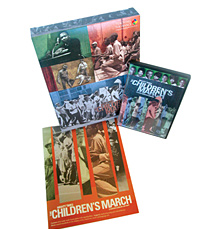
If I had them learn all about the Holocaust through the lens of propaganda....Hitler was incredibly successful because of propaganda.  What if we studied advertising, looking at propaganda today?  Diane Cordell gave me some great links, the best of which was icivics.org.  What if we talked politics today?  John Boehner gave me great fodder by calling the sequester, "Obama's Sequester."  What if we looked back at the Civil Rights Movement? Teaching Tolerance's movie about The Children's March helped here. How is this propaganda?  Can the children learn from this?  Can we use propaganda to create posters in the school convincing kids to be upstanders against bullies (we are reading about bullies this month as a school)?

We started the project, they kids are loving it, focused, enthusiastic, reading, writing, researching, and learning.  I know that I have linked it to my curriculum so I can feel comfortable with it.  But it still felt like I was doing something wrong.  Until I started to think about why I teach.

I don't teach so the children will do well on state tests.  I don't teach so I will get a good score on my APPR assessment.  I certainly don't do it for the fame and fortune.  I teach because I want my world to be better and I hope that my students will be the ones to make it so.


How then does a unit on the Holocaust and propaganda help?  Maybe they can learn that everything they hear about how Muslims want to harm Americans doesn't pertain to most Muslims and "Y", the lone Muslim in my class can be proud of his religion instead of ashamed of it.  Maybe they can learn that not all Latin Americans are living on welfare and taking from our government.  Then "J" won't have to feel uncomfortable telling people she is from Ecuador.  Maybe they will learn to be aware of news reports, commercials, and magazine ads, knowing that they might have a skewed perspective that cannot always be trusted.  And maybe, just maybe, they will make this world a better place for all this learning.

I don't teach so my students will learn to read and write for a test.  But preparing them for a test doesn't mean I have to give up all the reasons I do teach.  I want my students to be better.  I am counting on them to save us all.

Why do you teach?

Sunday, February 3, 2013

Global Connections


I belong to an amazing group called The Global Classroom Project.  I love this group.  The teachers have fabulous ideas, talk about the ups and downs of global connections, and seek out collaborators.  If you haven't looked at the site, you must check it out.
Recently, a blog was posted by Michael Graffin as a reposting of a blog created by a student in Honduros.  The class had just completed a mystery skype call and this student was discussing the awkward, nearly offensive questions asked by the mystery class, which turned out to be in Texas.  The two questions in point: "Do you guys use cell phones?" and "How does your house look like?"  You can read her blog to see her view about these questions.

This started a conversation in the Google group about being careful how we communicate with each other and what questions we ask.  So I just want to put in my two cents on the subject.  (You should note that I already talked online with Michael about my response. He, as usual, invites conversation.)

My purpose for Going Global with my class is an idealistic one.  I hope that my kids do a better job than we have.  I want them to understand, accept, and connect with others, regardless of language, religion, race, gender, etc.  I want them to learn that we are all people, deserving of respect and consideration.  And I want them to remember this when it comes time to work with others, have discussions with others, argue with others.  We are all people!

When I was growing up, in the 60s, we were just starting to talk about differences as positive.  "Be yourself."    "Love who you are and love the one you're with."  But, along with loving each other, I was taught not to insult anyone.  And it was insulting to stare, to ask questions, to recognize differences.  So we never even looked at each other.  Really.  If a person of color walked into the restaurant where I was eating, in my very white neighborhood, everyone would look away.  To make eye contact might indicate that you were afraid of them or didn't want them there.  So, in order to show our respect, we just didn't look.  Strange but true.  I wasn't taught to do this.  It was modeled for me.


Did this work?  Of course not.  I learned that people are different and deserve different treatment from one another.  Poor and rich, black and white, abled and disabled.  Labels were important.  They defined for us how to act and how to treat each other.

But I have grown up.  I have learned that this is not the way.  And I have taken it upon myself to model differently for my students and my own child.  I ask questions.  I talk about clothing, jewelry, political beliefs, religious practices.  I ask questions.  And I keep talking.  And I make eye contact.  And I smile.  And I invite people to sit down with me.  And I make plans to go to dinner, the movies, a book club.  And I ask questions.


My students recently did a mystery skype call with a class in Texas.  Once we figured out the states we came from, the questions started flying.  They thought we were all gangsters (New Yorkers are usually depicted that way).  We thought they were all cowboys.  After finding out the truth was quite the opposite, we laughed about our misconceptions.  What did we learn?  That Texan students like the same music we do, watch the same movies and tv shows, and shop at the same stores.  Hmmm.  Not so different.  The accents were certainly different but not much else was.  And my students now have a new understanding of Texans and other Southerners.


I work in a very multicultural climate.  We often have conversations about similarities with our religious rituals, our family dinners, and our weekend responsibilities.  We are so different and yet so similar. I don't ever want my students to stop asking questions.  Eventually, their questions will get more mature, less "insulting".  And, maybe someday, they won't need to ask questions about each other.  They will just accept and understand.  

What do you think?

Thursday, November 1, 2012

Is Technology Ruining Attention Spans?


This morning, my principal sent me an article to read, asking me for my thoughts.  I have many thoughts and felt the need to share with you.  The article, "Technology is Changing How Students Learn, Teachers Say," written by Matt Richtel, for the New York Times can be read here.
Read the article first and then come back and see my views.

1. I do not believe it is technology that is limiting students attention span.  Give any kid an activity they love...build something, paint something, writing something, read something...and you will find a child who has a very long attention span.  Children today, like always, have a longer attention span when they are interested in what is being taught. 

I clearly remember struggling to stay focused in school when I was being lectured to.  I doodled, read my book, played with my hair, passed notes to my friends.  If I had had a phone, I definitely would have been texting.  I do not have an attentional issue. What I did have then, though, was a fear of the principal's office.  I was basically a good girl.  I did what I was supposed to do, at least as far as the teachers could tell.  Today, I find many of my students don't have that fear.  And, personally, I am glad.  Why should students be  afraid of us?

2. Children today know that there are different ways to learn.  They are unwilling or unable (depending on age and maturity level) to sit bored for 5 hours in a classroom when they know they can learn the same information watching a show on the Discovery Channel, or communicating with their friends, or creating a project. I know that every time I present a new topic, many hands go up to tell me about the movie they watched or the show on tv or the trip they took with their parents. 

When I was in school, there was no Discovery Channel, movies were on 8mm reels and were boring (remember the voice overs), and creative teaching was usually a once a year activity.  I still remember the one time we made candles in 4th grade.  It is embedded in my memory because it was so unusual.

3. I do not put on a dog and pony show to get my students' attention.  I teach them with short lessons and get them to understand that, when I am giving instruction, they need to pay attention so they can do the coming assignment.  This takes "training."  Children need to learn how to focus just like they need to learn how to write their letters.  It is a skill and we need to teach it.  

Moon MemoriesWhen I was growing up, my parents taught me to focus.  How?  I remember being forced (yes I felt forced) to sit and watch the moon landing.  Yawn.  I was 5.  My tv was black and white.  The news reporters were BORING!  Today, I am glad I did that but then....And this was a pretty typical thing we did.  Dinner conversations were endless.  Long after I was done and ready to leave the table, I was still being asked questions about politics and school and my future.  BORING!  Car rides...they were endless.  We never flew anywhere.  And the music was my parents favorite 50s station or - gasp - talk radio.  And we were not allowed to ask how much longer the car ride was.  So we endured.  As an adult, I recognize the value of all of those shows and discussions.  But as a child, it was boring.  Really set me up for a boring classroom. LOL


4. The communication skills (reading, writing, speaking, and listening) are greatly enhanced by technology.  Knowing that the audience for their latest writing piece will be over 10,000 people who read our blogs is a much greater motivator than - do well so it shows in your report card.  Working on projects with a class across the country forces students to improve their communication skills or they will be unable to complete the task.  Email messages, message boards, chat rooms, and blogs all help to build communication skills.

5. I KNOW that my students are improving their reading and writing skills more since I started using technology than they ever did prior to my using it so pervasively.  I not only have the assessments to prove it, but I see them so much more motivated to learn.  Imagine a child in a project on Natural Disasters (this year's geography project).  He struggles with reading text and must answer specific questions.  He lets his counterpart in Illinois answer all the questions.  But then, when they skype together, he realizes that many of the answers are incomplete or incorrect.  (Or his teacher points this out to him).  At this point, he is forced to find ways to understand the articles and books.  He is more motivated...even if it is just to prove his partner wrong.


This article was wrong on so many levels.  How can you ask teachers yes and no questions and expect to get accurate answers?  And how can you ask teachers who are trying to teach today the same way we taught 30 years ago if students have a shorter attention span?  I have a shorter attention span!  And, by the way, I clearly remember when it was Sesame Street that was ruining attention spans.  This is not new.

What do you think?